Health & Safety Policy — Business Waste Removal Surbiton
This document sets out the health and safety policy for our business waste removal operations serving the local area. The policy applies to all activities connected with commercial and business rubbish collection, transfer and disposal in the rubbish company service area and surrounding locations. Its purpose is to protect employees, contractors, clients and the public by establishing clear responsibilities, safe working practices and a commitment to continuous improvement. The scope covers site-based collections, vehicle operations, temporary storage, segregation and transfer of waste streams.All staff, including supervisors and drivers, must understand their role in implementing this policy. Management will ensure resources are made available for training, suitable equipment and monitoring. The policy aligns with prevailing statutory duties and industry standards for commercial waste removal and for the broader waste removal service area. It is the responsibility of every team member to follow procedures, report hazards and cooperate with risk control measures so that operations remain safe and legally compliant.
Policy Objectives and Legal Compliance
The objectives are to: prevent workplace injuries and ill health, control risks associated with business rubbish removal, maintain vehicles and plant in a safe condition, and ensure safe handling of hazardous or controlled wastes. We will comply with all relevant legislation and good practice for rubbish collection and the wider waste removal service area. Regular risk assessments will be completed and reviewed. Where applicable, specific permits and documentation will be maintained to demonstrate lawful handling and transfer of regulated waste types.Risk assessment is central to safe operations. Before any collection or transfer, site-specific hazards will be identified and mitigated. This includes assessing manual handling risks when lifting bins or bulky items, vehicle movement and reversing, interaction with members of the public, slips/trips on uneven loading areas and risks from hazardous contents. Control measures can include mechanical lifting aids, clear traffic management, prohibiting lone working in high-risk scenarios and using appropriate containment. Records of assessments and action plans will be kept and updated when activities change.
Training, Competence and Communication
Employees will receive induction, role-specific training and periodic refresher training to ensure competence in safe waste handling, vehicle operation and emergency procedures. Training covers safe manual handling techniques, segregation rules for recyclables and hazardous substances, use of personal protective equipment and incident reporting. Clear communication channels will be maintained so that staff can raise concerns or suggest improvements. Supervisors will monitor performance and coach safe behaviour; performance indicators for safety will inform management review of the rubbish company service area operations.Equipment and vehicles will be maintained under a documented schedule; defects will be reported and removed from service until repaired. Personal protective equipment (PPE) will be provided as required and its use enforced. Material handling aids, secured load arrangements and safe access to vehicle platforms are mandatory. Safe systems of work will be developed for specific activities such as bulky item removal, mattress handling and dismantling of office furniture to minimise risk to staff and clients within the commercial waste removal environment.
Emergency procedures and incident management are essential. All incidents, near misses and hazards must be reported promptly, investigated and recorded. Lessons learned will be shared and controls revised to prevent recurrence. Incident investigations will identify root causes, corrective actions and timescales for completion. We will maintain first-aid provision appropriate to the scale of our operations and ensure trained personnel are available. Regular drills and reviews will ensure readiness and that staff know evacuation and emergency contacts for each site visited by the rubbish company service area teams.
 Handling of hazardous or specialist wastes requires strict compliance with segregation, packaging and documentation protocols. Hazardous wastes such as classified chemicals, asbestos-containing materials or certain electronic components must be identified and treated in accordance with legislation and accepted waste carrier practices. Staff will be trained to recognise such items, isolate them safely and arrange transfer only to authorised treatment facilities. Spill response kits and containment procedures will be available on vehicles and at operational hubs to reduce environmental risk.
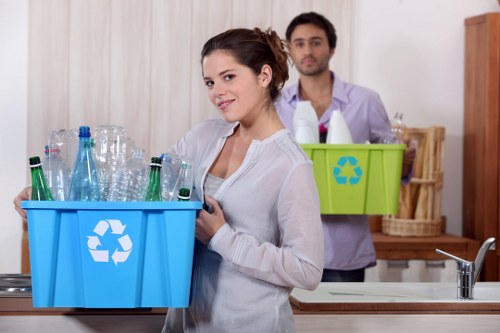 Monitoring, audit and continuous improvement processes will measure the effectiveness of this policy. Regular inspections, safety audits and vehicle checks will be carried out and documented. Safety performance metrics will include incidents, near misses, training completion, vehicle defects and compliance with segregation rules for the waste removal service area. Management will review this policy annually or sooner if significant changes occur, and will implement improvements based on audit findings, incident learnings and regulatory updates. We commit to a proactive safety culture across all business waste removal activities.
Roles and responsibilities are defined to ensure accountability: senior management provides leadership and resources; supervisors ensure safe systems are followed day-to-day; employees follow instructions, use PPE and report hazards. Contractors engaged for specialist tasks must be assessed and monitored against our safety standards. The policy requires that all personnel actively contribute to safety, and that frontline staff are empowered to stop work where immediate danger is identified. Clear escalation routes will be maintained for unresolved safety concerns.
Implementation measures include written procedures, documented risk assessments, toolbox talks, and recorded training. Operational checklists will be used for vehicle loading, securement and route planning to reduce interaction with pedestrians and traffic exposure. Secure transfer documentation for controlled wastes will be maintained to evidence correct handling throughout the logistics chain in the rubbish removal service area. Regular stakeholder engagement will ensure that clients understand their responsibilities for waste segregation and safe access during collections.
The policy is endorsed by senior management and will be communicated to all staff, contractors and relevant stakeholders. It will be reviewed periodically and when operational changes, incidents or regulatory updates demand. Our aim is to provide reliable, compliant and safe business waste removal services across the area we serve, protecting people, property and the environment through effective risk control and a culture of continuous safety improvement.
